Exploring the Depths of Foil Boards in Kiteboarding
Intro
Kiteboarding has come a long way since its inception, and within this realm, the evolution of foil boards marks a significant leap in technology and performance. Much like how a caterpillar transforms into a butterfly, foil boards have redefined the essence of riding over water. With their unique design, they offer a different approach to harnessing the wind's power, allowing riders to glide effortlessly above the waves.
This section will set the stage, revealing the key dimensions that make foil boards pivotal for both novices and seasoned kiteboarders alike. Understanding these components is essential for anyone looking to elevate their kiteboarding experience. With this exploration, readers will delve into the specific features and attributes that distinguish foil boards, preparing them for a deeper dive into the technical aspects and practicalities of this fascinating gear.
Preface to Foil Boards
Foil boards have carved out a unique niche in the kiteboarding community, shaping the ways enthusiasts engage with water sports. Their ability to glide seamlessly over the water has drawn attention for not only enhancing performance but also for introducing an exciting new dimension to the thrill of riding. Understanding foil boards is crucial for anyone looking to elevate their kiteboarding experience. These boards combine innovative design with scientific principles of hydrodynamics, allowing riders to achieve exceptional speed and maneuverability.
Definition and Functionality
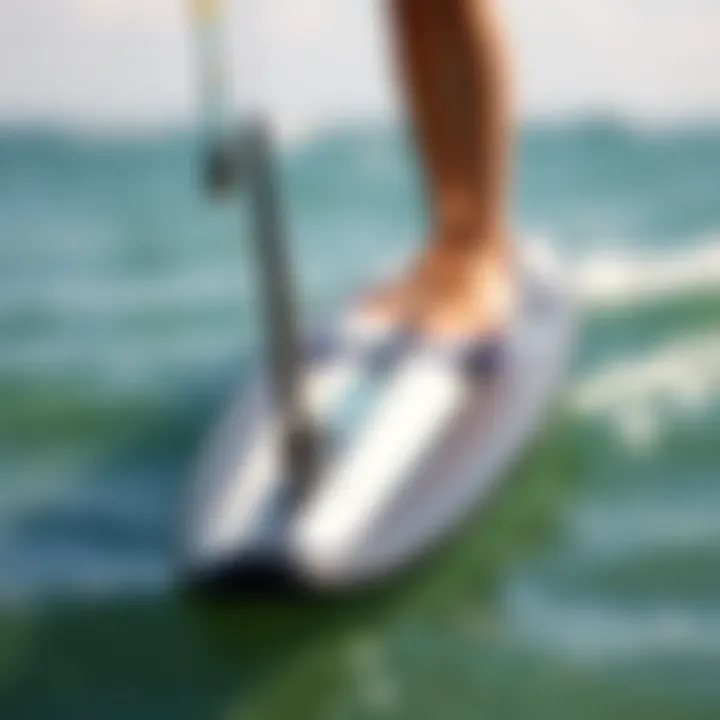
Foil boards consist of a board attached to a hydrofoil, which is submerged beneath the water. The hydrofoil, acting very much like an airplane wing, generates lift when traveling at a certain speed, elevating the rider above the water. This capability not only reduces drag but also provides a smoother ride that is less affected by water surface conditions. The freedom that comes with riding above the waves is unmatched and can be described as a kind of flying sensation that brings joy to many kiteboarders.
Moreover, the functionality of foil boards enables riders to harness wind power more effectively, making them less reliant on high wind conditions. This adaptability offers kiteboarders of varied skills the chance to enjoy the sport across a broader range of environments. For instance, beginners can find themselves having fun in lighter winds, while seasoned professionals can push their limits with thrilling tricks and stunts.
Brief History of Foil Boarding
The roots of foil boarding extend back to the mid-20th century, primarily among windsurfing enthusiasts. In the late 1960s and early 1970s, innovators began experimenting with hydrofoil designs for windsurfing, but it wasn’t until the early 2000s that foiling found significant traction in kiteboarding. As technology advanced and materials like carbon fiber became more widely available, the construction of more efficient and lightweight foil boards materialized.
An important milestone came when pioneers like Laird Hamilton started showcasing the potential of foil boards in various settings, from flat-water locations to the exhilarating realms of ocean waves. As the technique gained popularity, manufacturers started producing various models that catered to the diverse needs of kiteboarders, translating into an explosion of interest across the globe. Today, foil boarding continues to evolve, propelling kiteboarding into a future of unexplored possibilities and experiences.
The Mechanics of Foil Boards
Understanding the mechanics behind foil boards is essential for any kiteboarder looking to elevate their session on the water. It breaks down how these boards function, which is crucial for enhancing performance and ensuring safety. Without grasping these fundamental concepts, one might find themselves struggling unnecessarily as they navigate through different conditions. Essentially, when you comprehend the mechanics, you harness better control over your rides, leading to a more enjoyable experience.
Understanding Hydrodynamics
Hydrodynamics, the study of fluids in motion, plays a pivotal role in how foil boards operate. When a foil board is propelled through water, it generates forces that can lift the board above the surface, allowing for a smoother ride. This phenomenon occurs due to the shape and angle of the foil, which creates differing pressures above and below the wing.
One has to reckon with the idea that the board’s efficiency largely hinges on its design. A streamlined shape minimizes drag and maximizes lift, opening up possibilities for fast-paced cruising without the usual resistance faced with traditional boards.
Here are a few key points to consider regarding hydrodynamics:
- Lift and Drag Balance: It’s imperative that the foil’s design achieves the right balance to lift the board without creating excess drag.
- Speed Versus Lift: As speed increases, so does lift, but there is a sweet spot where efficiency is optimized. Too much speed could lead to instability.
- Water Conditions: The surface of the water can influence the dynamics at play. Flat water offers different advantages compared to choppy conditions.
Understanding these principles allows kiteboarders to appreciate the nuances of their ride and adapt their technique accordingly, whether facing a calm afternoon or battling turbulent waves.
Lift Generation Explained
Lift generation is a fundamental aspect of foil boarding that draws on Bernoulli's principle, where faster fluid over a surface reduces pressure. In simpler terms, when the wing of the foil moves through water, it creates an area of low pressure above it and higher pressure below. This pressure differential is what pulls the board upwards and allows for those exhilarating moments when you're gliding above the surface.
In foil boarding, achieving consistent lift can be particularly tricky, especially for newcomers. Several elements influence how effectively lift is generated:
- Angle of Attack: This refers to the angle between the wing and the water surface. Adjusting this angle can significantly affect lift. Too steep, and you risk stalling; too shallow could mean you’re not harnessing enough lift.
- Foil Design: Different wing shapes offer diverse lifting characteristics. For instance, a wider wing might generate more lift at slower speeds, while a narrower one may be better for high-speed conditions.
- Speed: As mentioned previously, the speed at which one travels impacts lift. Beginners might find it easier to start with more surface area to help catch that lift without needing to accelerate too aggressively.
In this world of kiteboarding, mastering lift generation not only improves efficiency but also adds a layer of safety. A thorough understanding of these mechanics ensures you can make real-time decisions while riding, enhancing not just your performance but also your overall enjoyment on your foil board.
"Understanding the mechanics of foil boards is like unlocking the secrets of the ocean—once you know them, the possibilities are endless."
For a more in-depth look at these concepts, check out resources like Wikipedia or Britannica. They provide a deeper dive into the science behind these mechanics, and how they apply directly to kiteboarding adventures.
Design Elements of Foil Boards
The design elements of foil boards are critical to their performance and user experience in kiteboarding. Understanding these aspects can make the difference between a good ride and a great one. With advancements in technology and a better understanding of hydrodynamics, the design features continue evolving. Let’s dive into two fundamental areas that play a big role: wing shapes and sizes, as well as material composition.


Wing Shapes and Sizes
When it comes to wing shapes and sizes, there’s no one-size-fits-all approach. Each shape serves a unique purpose depending on riding conditions and skill level. For example, a larger wing usually provides more lift, making it ideal for slow speeds or lighter wind conditions. In contrast, smaller wings can create less drag, offering increased speed for the more experienced rider.
- High Aspect Ratio Wings: They are slender and designed for speed and efficiency. Optimal for advanced kiteboarders looking to race or ride in strong winds.
- Low Aspect Ratio Wings: These wings offer increased stability and lift at slower speeds, making them perfect for beginners and recreational riders.
Ultimately, selecting the appropriate wing shape can significantly enhance the riding experience, allowing riders to maximize speed, control, and comfort on the water.
Material Composition
The choice of materials used in construction is another crucial element that influences a foil board's performance, durability, and weight. Several materials stand out in the industry, each with its own set of benefits and drawbacks. Let’s explore three common materials used in foil board construction: carbon fiber, foam core, and vinyl ester resins.
Carbon Fiber
Carbon fiber is well-regarded for its impressive strength-to-weight ratio. This powerful material contributes to the board's rigidity and responsiveness, making it highly desirable among competitive riders. Its lightweight nature allows for quicker maneuverability in the water. However, the price tag can be steep, making it a less accessible choice for newcomers to the sport.
- Key Characteristic: Exceptional stiffness - resulting in increased performance and less flex.
- Advantages: High durability, resistant to warping during use; suitable for dynamic riding styles.
- Disadvantages: Higher cost and potential for damage in extreme conditions if not maintained properly.
Foam Core
Foam core materials, often made from expanded polystyrene, are a favorite choice for those just getting into kiteboarding. These cores provide an excellent buoyancy-to-weight ratio, making it easier for beginners to find their footing and get comfortable on the water. While foam cores are less rigid compared to carbon fiber, they are generally more affordable, making them an attractive option for entry-level boards.
- Key Characteristic: Lightweight and buoyant - ideal for novice riders.
- Advantages: Affordability, ease of handling, forgiving nature during falls.
- Disadvantages: May not offer the same level of performance or longevity as more premium materials.
Vinyl Ester Resins
Vinyl ester resins stand out for their resilience and waterproof qualities. They bond well with a variety of core materials, enhancing the overall construction’s durability. These resins can resist impacts and environmental degradation, which makes them suitable for various conditions. However, they may not be as lightweight as other materials, potentially affecting the overall weight of the board.
- Key Characteristic: Superior water resistance - providing longevity in marine environments.
- Advantages: Strong impact resistance, effective in diverse weather conditions.
- Disadvantages: Heavier materials can affect maneuverability and speed for some riders.
"The right materials and design elements can transform your kiteboarding experience, enabling riders to unlock their potential on the water."
Ultimately, choosing the right materials and design elements in a foil board involves weighing the preferences and style of the rider. Beginners may prioritize buoyancy and stability, while seasoned kiteboarders often seek performance enhancements that come with advanced materials like carbon fiber. Each decision made in the design process impacts how a rider interacts with the sport, shaping their experiences under the kite.
Advantages of Using Foil Boards
Foil boards have surged to prominence in the kiteboarding realm, their distinctive design and functional advantages catching the eye of both seasoned enthusiasts and newcomers alike. Understanding why these boards are becoming the go-to choice involves unpacking their core benefits. Unlike traditional boards, foil boards elevate riders above the water, enhancing overall performance in various aspects. The following sections will dive deeper into three key advantages: speed and efficiency, a smoother riding experience, and versatility in diverse conditions.
Increased Speed and Efficiency
One of the standout features of foil boards is their ability to reach higher speeds with less effort. When a rider takes to the water with a foil board, the hydrofoil lifts the board out of the water, drastically reducing drag. This unique characteristic enables riders to glide on the surface, contributing to significantly faster speeds that would be hard to achieve on standard kiteboards. In practical terms, that means you can cover longer distances with minimal energy expenditure. This increased efficiency isn't just about speed; it translates into a longer time on the water without wearing yourself out.
"Many foil boarders report higher speeds not just in ideal conditions but also in less-than-perfect winds, showcasing the adaptability foiling offers."
A few of the elements contributing to this improved efficiency include:
- Lift Generation: The design of the wings allows for the foil to create lift almost instantaneously, making it easier for riders to pop up onto the foil.
- Reduced Resistance: Riding above the water minimizes the surface area in contact with it, providing a seamless ride that feels almost effortless.
Smooth Riding Experience
Another crucial advantage of foil boards is the exceptionally smooth riding experience they offer. While typical kiteboarding might present a bumpy ride over waves or choppy water, foiling provides a different story. Riders benefit from a floating sensation that drastically mellows out the effects of waves.
The hydrodynamic design of the foils absorbs most bumps, making the ride feel fluid and continuous, almost like "hovering" above the water. Experienced riders often describe the sensation as akin to flying, as the board glides effortlessly without unwanted jolts. This smoothness not only enhances enjoyment but also improves control, allowing kiteboarders to focus on technique without being thrown off by turbulent water.
Moreover, this feature can be particularly advantageous for those who may be recovering from an injury or are new to the sport, as a more forgiving ride helps build confidence and enjoyment.
Versatility in Conditions


Foil boards also shine when it comes to their versatility across varied riding conditions. Because they do not rely heavily on wind strength or water state, foil boards can be used in a broader range of environments than traditional boards. Light winds that might leave kiteboarders floundering with standard gear become an opportunity for foilers to take to the water and enjoy a thrilling ride.
Riders can explore:
- Flat Water: Ideal for beginners, providing the perfect environment to practice their skills and improve their technique.
- Choppy Water: Foils slice through rough patches effortlessly, making for a more enjoyable experience even in less-than-ideal conditions.
- Waves: For the more adventurous, foils emerge as superb tools for wave riding, allowing for exciting maneuverability and the ability to catch waves earlier than a traditional board would permit.
This adaptability not only makes foiling a more practical choice for all-weather kiteboarders but also opens up a world of exploration, encouraging riders to seek out new locales and conditions they might otherwise avoid.
In summary, the advantages of using foil boards are clear: they offer greater speed and efficiency, provide a smoother ride, and are versatile enough to tackle a range of conditions from tranquil lakes to rough seas. Understanding these benefits positions kiteboarders to fully appreciate the unique potential of using foil boards and enhances their overall experience in kiteboarding.
Challenges with Foil Boards
Foil boards, while offering thrilling experiences on the water, come with their own set of challenges that every kiteboarder should consider. Understanding these hurdles can help in maximizing performance and enjoyment, especially for beginners who might find themselves in deep waters—figuratively speaking and sometimes literally. Addressing these challenges is crucial, not only for safety but also for enhancing skills over time. Here, we’ll dive into two significant challenges: the learning curve faced by newcomers and the essential maintenance required to keep your foil board in shape.
Learning Curve for Beginners
Embracing the art of foil boarding can be akin to learning to ride a bicycle with no training wheels on a windy street—exciting yet daunting. For beginners, the transition from traditional kiteboarding to foiling can be particularly steep, marked by several key factors:
- Balancing Techniques: Unlike standard boards that sit directly on the surface, foil boards lift out of the water, instigating a whole new balance mechanism. Riders must master shifting their weight correctly, which can lead to unexpected falls as they grapple with staying upright.
- Speed Management: In foilboarding, speed can escalate quickly. New riders may find themselves struggling to control acceleration and deceleration, possibly resulting in crashes or loss of control. The board's ability to glide can be both a blessing and a curse—too much speed can lead to instability.
- Wind Awareness: Foil boarding demands acute awareness of wind conditions. Since these boards rely on hydrodynamics and lift, understanding wind direction and power is pivotal.
"The only way to master foilboarding is to mess up and get back up again."
Ultimately, patience and practice pays off. Consider taking lessons with an experienced instructor, as they can offer tailored feedback and tips that could set you on the right path faster.
Maintenance and Care
Once you've navigated the initial steep learning curve, keeping your foil board in tip-top shape is vital for continued performance and safety on the water. Neglecting maintenance may lead to compromised performance or even accidents. Here are some core aspects of maintenance and care to keep in mind:
- Washing after Use: Saltwater and sand can wreak havoc on the materials of a foil board. Rinsing the board and foil with fresh water immediately after use can prevent corrosion and build-up, prolonging its life.
- Regular Inspection: It's vital to periodically check for any signs of damage—cracks, chipped edges, or loose fittings. Addressing these concerns before they escalate can save you from costly repairs or dangerous malfunctions.
- Proper Storage: Storing the board correctly when not in use is as important as the riding itself. Keeping it in a cool, dry place, away from direct sunlight, can help preserve the materials and prevent warping.
- Foil Maintenance: The foil itself requires special attention. Regularly check the fuselage and wings for damage and ensure that the screws are tightened. A well-maintained foil can significantly enhance ride stability and efficiency.
- Replacement Parts: Understand that some components will wear down with time. Having replacement parts handy can ensure that you don’t miss out on good days on the water due to minor issues.
As you dive into the challenges of foil boarding, it's essential to approach these with an open mind. The initial trials can morph into exhilarating experiences with the right guidance and commitment. By understanding and addressing these challenges, riders can enjoy the full range of benefits that foil boards have to offer.
Choosing the Right Foil Board
When it comes to kiteboarding, selecting the right foil board can feel like navigating a labyrinth. This decision is pivotal, influencing not just performance but also the overall experience on the water. Each rider possesses unique preferences, and understanding these intricacies is essential for making an informed choice. The right foil board ensures that riders can harness their skills effectively, leading to a more enjoyable and productive time on the water.
Skill Level Considerations
Your skill level plays a vital role in determining which foil board suits you best. For instance, beginners often require boards that offer stability and ease of control. These boards are typically larger, providing a forgiving platform for learning the basics of kiteboarding, including balance and coordination. Conversely, more advanced riders might opt for boards that are smaller and more nimble, allowing for quicker turns and tricks. It's crucial to take your current capabilities into account, as mismatched choices can lead to frustration on the water. As a rule of thumb, new riders should consider boards with a broader wingspan, which aids in lift and stability, while experts might seek a more specialized design that aligns with their riding style.
Application and Riding Style
In kiteboarding, the application and riding style dictate the type of foil board that will serve you best. Let's delve into three popular styles:
Freeriding
Freeriding embodies the essence of freedom on the water. This style is characterized by its flexibility—riders can easily adapt their techniques in various conditions and terrains. Freeride foil boards are typically designed to offer a good balance between speed and maneuverability. They often feature larger wings that provide ample lift, making them a staple choice for those who want an all-around board capable of handling diverse environments. This adaptability is particularly beneficial for riders who enjoy exploring different spots and conditions. However, while their versatility is a boon, some specific freeride boards might struggle with high-speed stability, requiring a bit more finesse from the rider to maintain control.
Freestyle
For those who thrive on creativity and tricks, freestyle foil boarding is the way to go. This style encourages riders to execute jumps, spins, and maneuvers that showcase their skills and artistry. Freestyle boards are typically shorter, offering quicker response times and agility. A key characteristic of freestyle boards is their lightweight design, which allows for easier aerial moves. However, they may not perform as well in choppy waters, as their smaller size can equate to less stability when riding over waves. Taking the plunge into freestyle can be exhilarating, but it demands significant practice and control to master those tricky maneuvers.
Racing
Racing is the adrenaline-fueled side of foil boarding where speed is king. Racing boards are engineered for maximum speed and performance, featuring elongated wings and a streamlined body to cut through water efficiently. The key characteristic of racing boards is their focus on high-speed capability, making them a popular choice among competitive riders. However, potential buyers should keep in mind that while these boards excel in speed, they often sacrifice versatility and stability, making them less suitable for casual riding. Racing can be thrilling, but it demands a refined skill set to harness the board’s capabilities without feeling overwhelmed in challenging conditions.
Budget and Investment


In the world of foil boarding, budget considerations are paramount. A board's price can vary widely based on its materials, design, and brand reputation. Investing in a quality foil board often means a more enjoyable and lasting riding experience, but balancing quality with price is key. As a rough guideline, beginners might start with a mid-range board to gauge their commitment to the sport. More experienced riders should consider investing in specialized boards that align with their style for optimal performance. Comparing warranties and customer reviews along with doing adequate research can provide insight into long-term value and help you make an educated decision.
In addition, checking local classified ads or online marketplaces can sometimes yield gems that fit perfectly for those looking to ease into the sport without breaking the bank.
Foil Foil Board Safety Considerations
When it comes to getting on a foil board, safety is no laughing matter—it's the backbone of a rewarding kiteboarding experience. While the thrill of gliding above the water can be breathtaking, negligence around safety can lead to unfortunate mishaps. Both experienced riders and newcomers must consider essential gear and environmental risks, all of which contribute to a safer ride.
Essential Gear for Safety
Having the right gear on hand can make a world of difference. Here's a no-nonsense list of must-haves for foil board safety:
- Impact Vest: Provides flotation and cushioned protection during hard falls. When landing and the board decides to take a detour, an impact vest ensures that the body remains safeguarded.
- Helmet: A sturdy helmet is key, especially for those diving into jumps and tricks. Protecting one's head is not just wise; it could mean the difference between a scrape and a serious injury.
- Leash: Investing in a reliable leash is crucial. The leash keeps the board close, reducing the risk of it hitting you or others after a fall. Moreover, it prevents the board from floating away unexpectedly in open waters.
- Foot Straps: Depending on your skill level, foot straps can provide stability. They help to secure your feet during high-speed rides, ensuring that you remain attached to the board.
- Safety Knife: Always have a safety knife readily accessible. In case of entanglements, particularly with lines or seaweed, quick access to a knife can be a lifesaver.
Ensuring the presence of this gear isn't just about following guidelines; it’s about creating an environment where riding is enjoyable and, above all, safe. Clearing out any debris near your launch area also goes a long way in preventing accidents.
Understanding Environment Risks
Environment risks cannot be overlooked when kiteboarding. Water conditions, weather, and surrounding circumstances all play into safety and can dramatically affect your experience.
- Wind Conditions: Always assess the wind speed and direction. Too much wind can make for uncontrollable and dangerous situations, particularly for beginners. Conversely, strong gusts can sneak up, creating inconsistency in riding.
- Water Hazards: Be attuned to your surroundings. Piers, rocks, and shallow reefs can be lurking just beneath the surface, posing a danger when you're airborne or coming down from a jump. Getting familiar with your playground is essential.
- Currents and Tides: Understanding local currents and tides is vital. Certain areas may have strong currents that can sweep you away without you even knowing it. Check tide charts and ask local riders for tips on safe spots.
- Others in the Water: Be aware of other water users like swimmers, boats, and other kiteboarders. Sharing the water responsibly means being conscious of their presence and giving them a wide berth when riding.
In short, kiteboarding can quickly turn from exhilaration to danger if safety precautions are ignored. Equipping yourself with proper gear and being fully aware of environmental risks can lead to an enjoyable—and safe—time on the water.
"In kiteboarding, knowing when to push the envelope is just as important as securing it in the first place."
For more insights on kiteboarding safety, you can visit Wikitravel or the International Kiteboarding Organization.
With this understanding, kiteboarders can take steps to minimize risks while maximizing the pleasure of riding with foil boards.
Future Trends in Foil Board Technology
The realm of kiteboarding is ever-evolving, and the advent of foil boards represents a major leap in the sport's technological progression. As kiteboarders continually seek enhancements in their experience, understanding future trends in foil board technology is crucial. These innovations not only enhance performance but also promote safety and accessibility, making kiteboarding more appealing to enthusiasts across the globe.
Innovations in Materials
The materials used in foil board construction are constantly advancing. Historically, boards were made primarily of fiberglass, but the introduction of new composites has led to significant improvements in both strength and weight.
- Carbon Fiber: This is a heavyweight champion in the material realm. Carbon fiber offers excellent stiffness and lightweight characteristics, making boards agile and responsive. Many high-performance kiteboarders prefer this material due to its durability and lightweight nature.
- Foam Cores: These cores are being optimized continually for lower density at the same structural integrity. This means that a board can maintain its buoyancy while offering riders the thrill of flipping and performing tricks with ease.
- Recycled Materials: A push for sustainability is becoming increasingly crucial. Some brands are investing in recycled materials for their boards, which not only meets eco-friendly standards but also brings unique aesthetics to the water.
Advancements in Design
With materials evolving, the designs of foil boards are also drastically improving to enhance performance.
- Wing Design: Future designs are likely to focus on optimizing wing profiles to maximize lift while reducing drag. This leads to greater efficiency, allowing riders to enjoy smoother rides with less effort.
- Size Customization: Personalization is key. Manufacturers are beginning to experiment with modular designs, allowing riders to adjust wing sizes or even swap them out depending on conditions and personal preferences. This approach means that one board could cater to multiple riding styles.
- User-Centric Features: Innovations are including user-friendly adjustments, like more intuitive foot strap systems and ergonomic handles. These might seem like small changes, but they can make a massive difference in user experience, particularly for beginners.
As technology progresses, foil boards will not just become better tools but also more tailored instruments for each kiteboarder. The trend is not merely in what these boards can do but how they can adapt to the rider’s unique style and skills.
In essence, the future of foil board technology promises more than just incremental improvements. It points towards a future where kiteboarding can become more accessible, sustainable, and tailored to each individual, creating a richer experience on the water.
Closure
In wrapping up our exploration into the world of foil boards within kiteboarding, it's pertinent to recognize the multiple layers that come into play with this sophisticated equipment. Throughout the article, we have navigated a broad spectrum of topics, from understanding the mechanics of lift generation to pinpointing the distinct design elements that create a seamless ride.
The value of grasping these intricacies cannot be overstated. As kiteboarders—whether you're just starting out or have logged countless hours on the water—the knowledge of how foil boards operate can significantly enhance your riding experience. Not only does it allow you to choose the right equipment tailored to your style and skill level, but it also helps you to better navigate the conditions you might face on the water.
Key Benefits of Understanding Foil Boards
- Enhanced Performance: Knowing the ins and outs of foil dynamics can help you ride with improved speed and efficiency.
- Adaptability to Conditions: Understanding how various designs respond to different wind and water conditions empowers you to make informed choices.
- Safety and Care: Familiarity with maintenance requirements and safety gear can make a world of difference, reducing risk and prolonging the life of your equipment.
Learning about the innovations that lie ahead in foil board technology can further spark ontological curiosity. Staying abreast of advancements in materials and designs not only prepares you for the future but also provides insights that can optimize your current setup. Riding becomes less about chance and more about informed, strategic execution.
Ultimately, this journey into the realm of foil boards encourages kiteboarding enthusiasts to not only acquire and utilize this equipment, but to appreciate the artistry behind it. When you combine knowledge with practice, your experience can transcend from mere recreation to a deeply satisfying engagement with nature and technology alike. Sharing this acquired wisdom within the kiteboarding community fosters an environment of mutual growth—ensuring that the sport continues to evolve and flourish.